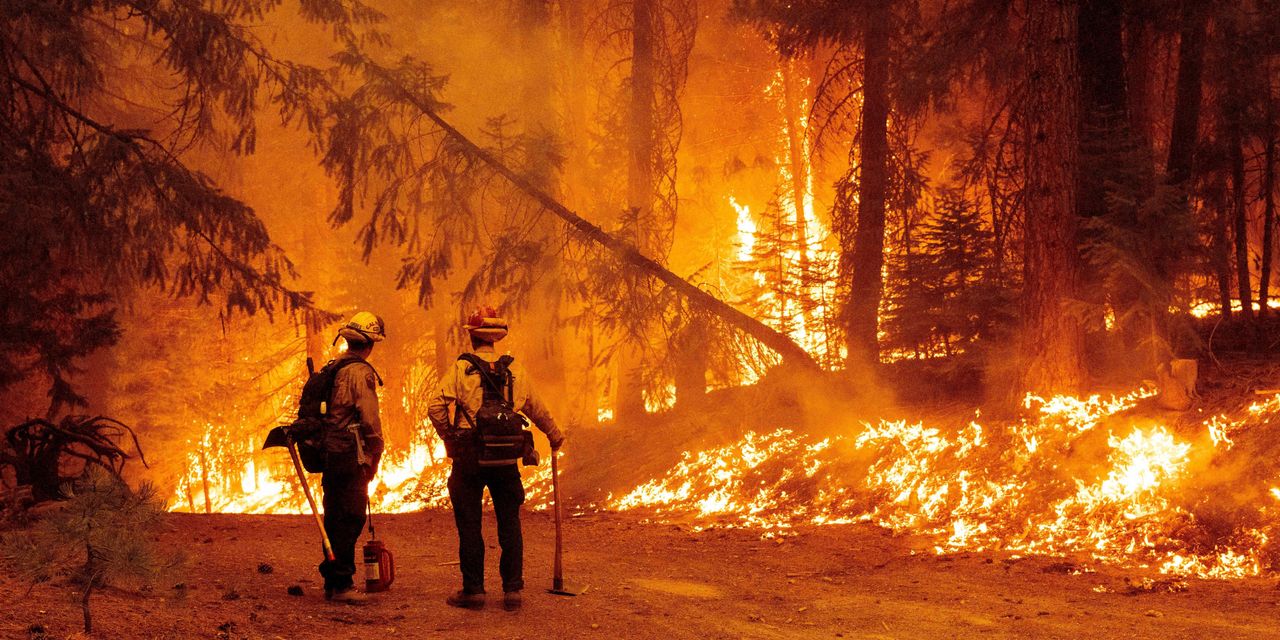
By now, most Americans have experienced at least one hazy, acrid, apocalyptic afternoon caused by wildfire smoke. The skies go gray. The sun turns blood-orange. Your phone reminds you to stay indoors, and you wonder if the end times are ahead of schedule. But according to a new study published in Communications Earth & Environment, it’s not just bad weather. Wildfire smoke is getting worse, and climate change has a lot to do with it.
Researchers set out to understand just how much of the damage from wildfire smoke we can attribute to human-caused climate change. Their target: tiny air pollutants known as PM2.5, or fine particulate matter, which can burrow into your lungs and bloodstream and wreak all kinds of havoc—from respiratory issues to early death.
Between 2006 and 2020, climate change was responsible for an estimated 15,000 deaths from wildfire-related PM2.5 across the continental United States. The economic fallout? A staggering $160 billion in costs tied to premature death and health impacts.
And those impacts aren’t spread evenly. The hardest-hit areas are all in the western U.S., especially California and Oregon. In fact, the top ten counties with the highest annual death rates from climate-related wildfire smoke saw mortality levels comparable to cancer, the country’s second leading cause of death.
So, what’s actually happening?
Thanks to rising global temperatures and drier conditions—classic symptoms of climate change—wildfires are burning more often, lasting longer, and covering more ground. Over just 15 years, the forest burn area increased by 62%, with 2020 setting the record as the worst wildfire year in recent memory. That single year alone was responsible for one-third of all deaths linked to climate change-driven smoke in the study, totaling nearly $58 billion in associated economic loss.
“This highlights the substantial impacts on nature that result in human deaths from failure to reduce greenhouse gas emissions,” the study authors wrote.
Let’s break it down: without the added fuel of climate change, tens of thousands of deaths could have been prevented. Billions in healthcare and lost productivity could have been saved. PM2.5 levels—driven heavily by smoke—are now responsible for nearly half of annual fine particulate pollution in the U.S., something that used to be more heavily tied to industrial or vehicle emissions.

In other words, wildfires aren’t just natural disasters anymore. They’re becoming climate-intensified health crises. And they’re not just a West Coast problem—smoke doesn’t need a passport to drift across the country. Even if you live thousands of miles from the nearest forest fire, you might be breathing the consequences.
The good news? These effects are not inevitable. The researchers modeled what smoke exposure might look like without the added push of climate change, and the results were clear: lower emissions mean fewer fires, less smoke, fewer deaths, and less economic damage.
This isn’t about politics. It’s about cause and effect. Drier forests + hotter temperatures = more smoke. More smoke = more tiny particles in your lungs. More particles = more hospital visits, more early deaths, and more zero-visibility mornings.
We may not be able to put out every wildfire, but we can slow down the match that’s lighting them faster and fiercer every year through well thought out, scientific-based policies no matter how difficult those decisions are to be made because people’s lives and our children’s future home depend on it. Because this is what it takes, being a real man who looks at the facts be willing to make sacrifices for changes that will build a better future that helps others.
BE Law et al. Anthropogenic climate change contributes to wildfire particulate matter and related mortality in the United States. Communications Earth & Environment (2025). https://doi.org/10.1038/s43247-025-02314-0