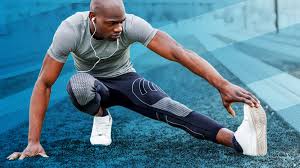
Flexibility exercises are a common staple in the routines of athletes and fitness enthusiasts, but new research from the Scandinavian Journal of Medicine & Science in Sports suggests that flexibility might do more than just enhance performance—it could be a key factor in longevity, particularly for those in middle age.
In a study involving 3,139 individuals between the ages of 46–65, researchers developed a “Flexindex” score to measure body flexibility. This score was calculated based on the passive range of motion in 20 different movements across seven joints, with a possible score range of 0–80.
While not surprising that women had a Flexindex score 35% higher than men, what was interesting was that those with higher flexibility were significantly more likely to survive over the study’s 12.9-year follow-up period for both sexes. In fact, Flexindex scores were nearly 10% higher in survivors compared to those who didn’t make it.
After adjusting for factors like age, body mass index, and overall health, the results showed that men with low flexibility had a 1.87-times higher risk of death, while women with low flexibility faced an even steeper 4.78-times higher risk compared to their more flexible peers.
“Being aerobically fit and strong and having good balance have been previously associated with low mortality. We were able to show that reduced body flexibility is also related to poor survival in middle-aged men and women,” said author Claudio Gil S. Araújo.
While flexibility is commonly ignored, it decreases with aging and it is important to focus on
CG S. Araujo et al. Reduced Body Flexibility Is Associated With Poor Survival in Middle-Aged Men and Women: A Prospective Cohort Study. Scandinavian Journal of Medicine & Science in Sports (2024). https://doi.org/10.1111/sms.14708