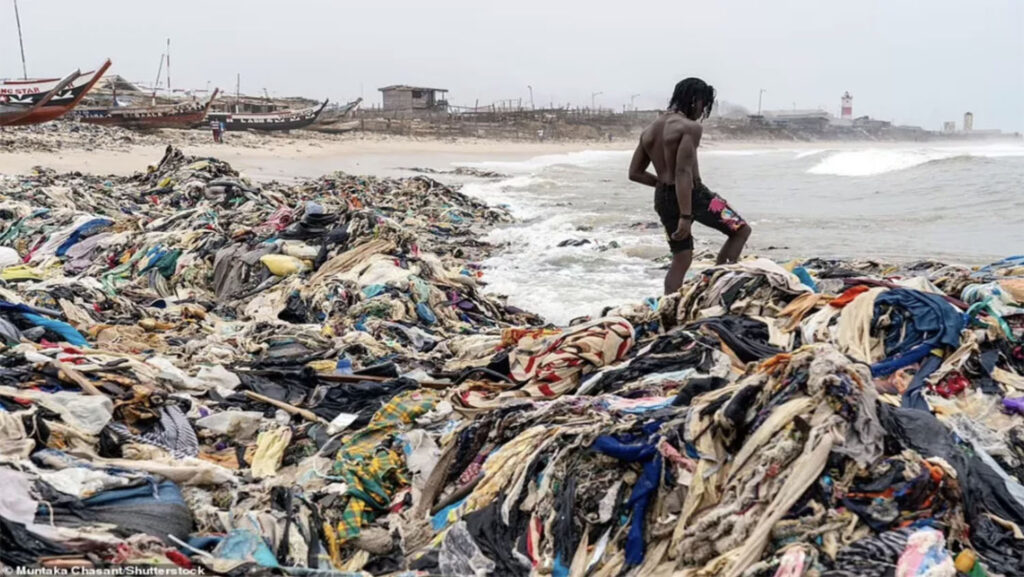
A study from North Carolina State University, published in Nature Communications, reveals that the global apparel industry is leaking millions of tons of plastic into the environment annually, an issue that is often overlooked and worsening over time.
Researchers discovered that in 2019, global apparel consumption generated over 20 million tons of plastic waste. Around 40% of this waste was improperly managed, leading to “plastic leakage.”
The study divided textile waste into two categories: synthetic materials (such as polyester, nylon, and acrylic) and natural fibers like cotton. The analysis encompassed the entire apparel value chain, including the plastics used in packaging.
Synthetic apparel was identified as the primary source of plastic waste, accounting for 18 million tons in 2019, with approximately 8.3 million tons potentially leaking into the environment. In contrast, cotton clothing generated 1.9 million tons of plastic waste, mainly from packaging.
The study also highlighted a disparity in where apparel is sold and where plastic waste leaks into the environment. High-income countries like the United States and Japan contributed significantly to pollution into lower-income countries through the secondary market of discarded clothing.
Fast fashion, and fashion in general, is a major contributor of waste into the environment. While it is heavily greenwashed to incentivize you to purchase from them, the fact is that there is no true ecofriendly nor sustainable way in how people in the United States and other high-income countries approach fashion.
Own less clothes, don’t buy new ones until you have worn out the old ones, recycle them properly, and buy used. And mostly importantly, don’t let other people shame you or make you feel bad about wearing the same clothes and don’t judge others either.
You don’t need to look good to feel good. You can feel good and let the man make the clothes rather than the clothes making the man.
A Kounina et al. The global apparel industry is a significant yet overlooked source of plastic leakage. Nature Communications (2024). https://doi.org/10.1038/s41467-024-49441-4