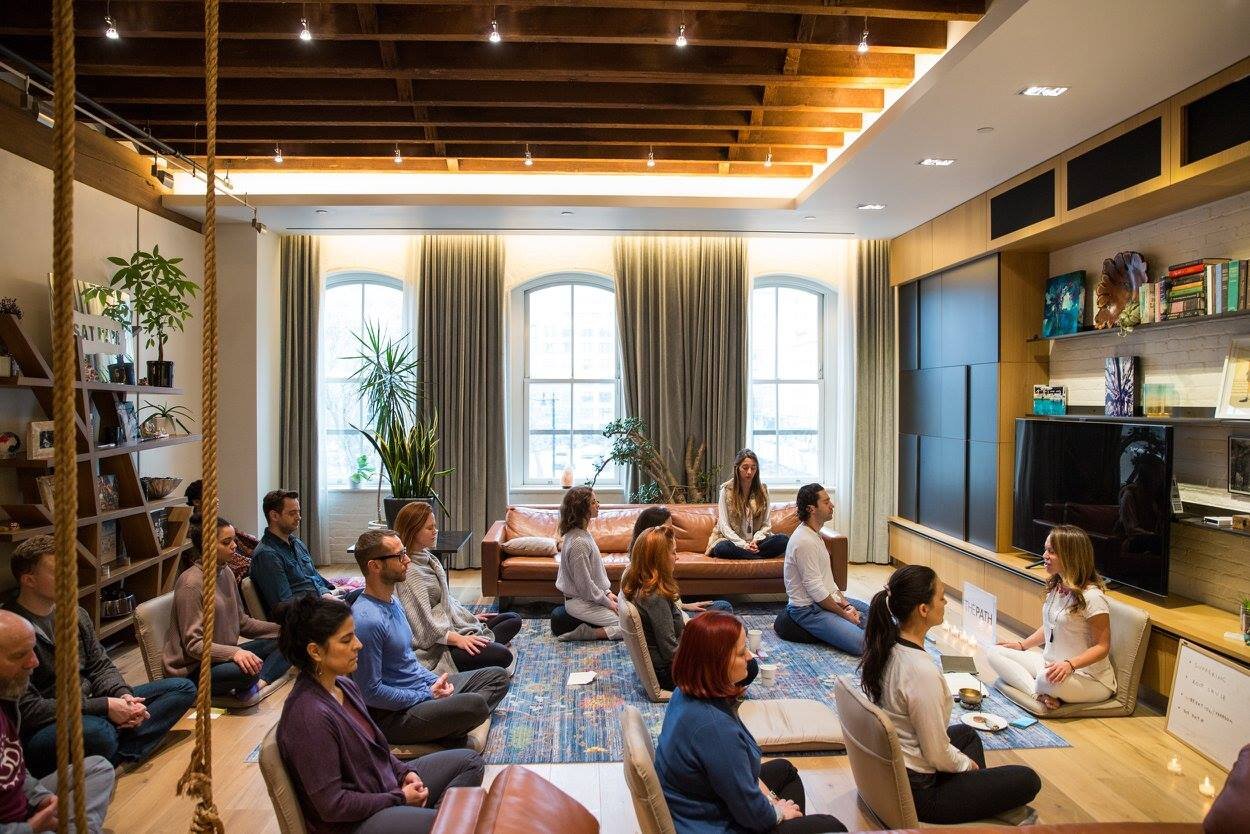
“Mindfulness meditation” (this is in quotes because most mindfulness being taught is not true mindfulness at all) has become quite the gimmick these days with many “instructors” offering to “teach” it with claims to wonderful benefits. However, as a practice co-opted from Buddhism, simply doing mindfulness meditation comes with a lot of negative consequences as well.
In a study published in the Journal of Personality and Social Psychology, researchers led by the University of Washington’s Foster’s School of Business, set out to find if there are any negative effects of mindfulness meditation.
“Meditating can reduce feelings of guilt, thus limiting reactions like generosity that are important to human relationships,” said lead author Andrew Hafenbrack. “Negative emotions may not be pleasant, but they can help us navigate social situations and maintain relationships.”
To simply put it, not all “negative” feelings, such as guilt or shame is bad, in fact, such feelings help us explore our relationship with others to improve how we interact with people.
For the study, the researchers ran a series of eight experiments with a total of approximately 1400 participants.
In the first experiment to demonstrate “mindfulness meditation” reduces guilt, subjects were randomly assigned to write about a prior situation to which they felt guilty about or to write about their previous day. Followed by writing, the subjects were to either do an eight-minuted guided mindfulness meditation or an eight-minute control recording where they were allowed to let their mind wander. Across the board, no matter what they wrote about, the mindfulness meditation group reported decreased feelings of guilt.
The rest of the experiments, subjects were tested whether or nor meditation would lead to prosocial reparative behaviors as a result of their guilt, such confronting the situation to make amends with a friend or whether or not they are allocate a hypothetical $100 to a charity, the person they wronged, or to themselves.
Researchers found that the guilt-reduction from meditation led to a 17% decrease in money allocated to the friend they have wronged along of other reduction of behaviors associated with making amends.
In conclusion, mindfulness meditation does not make you a better person no matter what is advertised or taught by some poser with a gimmick. Mindfulness meditation does calm the chatter of the mind and improve a sense of wellbeing helping you do better at whatever it is you do, and apparently, it’s being selfish and avoidant according to this study.
As a final experiment to this study, participants were again to write about a time that that wronged someone that lead to a feeling of guilt. This time, participants were asked to either listen to a mindfulness meditation recording or a loving-kindness meditation recording. Researchers found that the loving-kindness group reported higher intention to contact and make reparations to the people they harmed due to in the increase infects on others.
Therefore, it is important to know the stark difference between the practice of Buddhism and mindfulness meditation. Buddhism is a philosophy of life that has guidances and rules about how one should carry themselves in respecting others and attend to adverse events in life, this is true mindfulness, and the meditation part is to help improve one’s practice of the philosophy and teachings. America’s “mindfulness” movement, with all the unqualified “teachers” produced through gimmicky, abysmal quality certification mills, careless apps, and egotistical Instagram influencers or garbage money-oriented businesses, does not produce better people nor a better society. Meditation makes one better at what they are already doing, as in this case, makes people more selfish and focused on themselves.
Mindfulness meditation is not inherently a bad thing and is strongly encouraged to be practice. However, the context in which it is taught and practiced needs to be evaluated. Currently in the public eye as part of pop-culture, the intention of many ill-informed, and self-serving instructors, harnesses this important, powerful tool and skill in an unhelpful manner.
As for those gimmicky instructors out there, one cannot be “certified” mindful. Publishing books is of little evidence that you’re a good practitioner. It takes decades upon decades of hard work and strict training with gurus of whom have also dedicated themselves to decades of this practice.
AC Hafenbrack et al. Mindfulness meditation reduces guilt and prosocial reparation. Journal of Personality and Social Psychology. https://doi.org/10.1037/pspa0000298