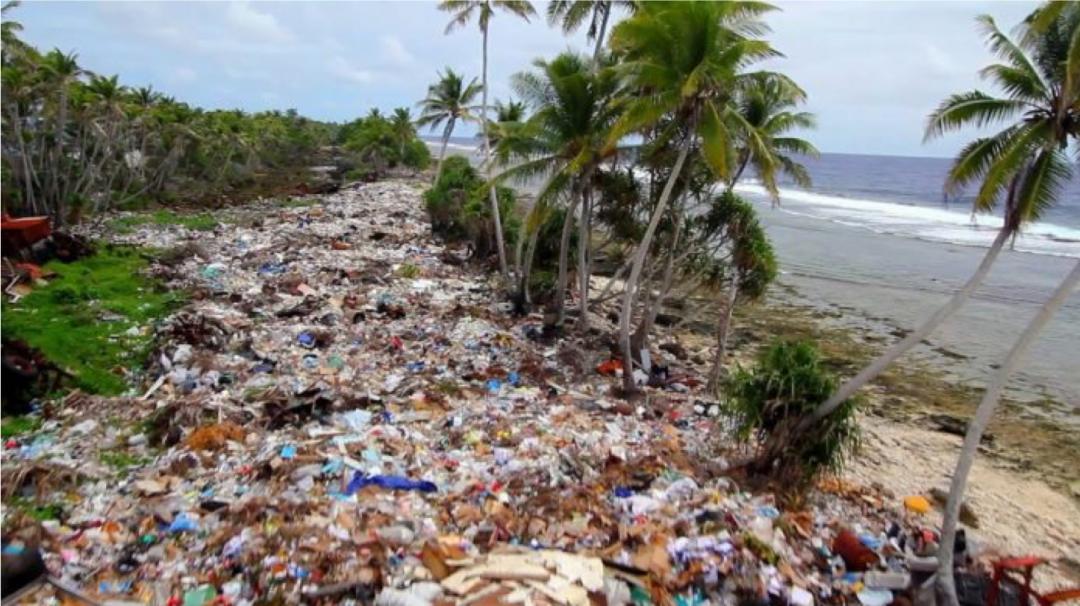
In 2009, an international team of scientists identified nine planetary boundaries of the Earth’s ecosystem, that if one or more is crossed, would lead to deleterious and/or catastrophic changes to the safety for which humans are able to survive in. They quantified seven of these boundaries included greenhouse gas emissions, ocean acidification, ozone layers, nitrogen and phosphorous cycle, freshwater use, land system changes, biodiversity. Two remained unquantified: chemical pollution and atmospheric aerosol.
New study published in Environmental Science and Technology of the American Chemical Society, addressed the missing chemical portion of the prior study.
Chemical pollution, now called “novel entities,” are identified and defined as “new substances, new forms of existing substances, and modified life forms” including “chemicals and other new types of engineered materials or organisms not previously known to the Earth system as well as naturally occurring elements mobilized by anthropogenic activities.” Or simply put, chemicals that are either created and modified by humans or chemicals are moved around by humans. For instance, plastic is a chemical created by humans that don’t naturally occur, and lead and mercury is a natural heavy metals that are dormant but thanks to humans are now everywhere on this planet including killing our children.
After reviewing scientific literature, especially those highlighting plastic pollution, creating an impact pathway from production of novel entities to impacts on Earth’s ecosystems, and applying criteria of assessment of control variables for the boundary, the team unfortunately concluded that humanity is currently operating outside the planetary boundary based on the evidence they found for the control variables.
As a matter of fact, human behavior is quite disgusting and need to clean up their act.
In the global market, is it estimated that there are at least 350,000 different types of manufactured chemicals including plastics, industrial chemicals, pesticides, consumer products, and pharmaceuticals.
Co-author Patricia Villarubia-Gómez of Stockholm University stated, “There has been a 50-fold increase in the production of chemicals since 1950. This is projected to triple again by 2050.” Plastic production has increased 79% from 2000 to 2015, alone.
“The pace that societies are producing and releasing new chemicals and other novel entities into the environment is not consistent with staying within a safe operating space for humanity,” Villarubia Gómez further stated.
Plastics themselves contain over 10,000 other chemicals, not just BPA that is cause of concern. Additionally, their degradation, currently still in the infancy of its study, can further create novel entities that are not yet known.
“Plastic production, use and waste affects other planetary boundaries as well. This includes climate, via fossil fuel use, land and fresh water systems via use, pollution, physical changes, and spread of invasive species, antibiotic resistance genes and pathogenic microbes in the oceans. Plastics have helped solve some environmental issues owing to their light weight and durability, but overuse and misuse is having devastating impacts on planetary health,” says study author Carney Almroth in a statement.
You, as man, are responsible for the what you produce and consume, and ultimately how this stuff ends up affecting your health and your children’s health. Men take accountability of their actions. Currently, the world need real men to act accordingly and altruistically, and no just going into business for themselves.
L Persson et al. Outside the safe operating space of the planetary boundary for novel entities. Environmental Science and Technology 2022. Published online 1/18/22. https://doi.org/10.1021/acs.est.1c04158